Verified reporting. Every story sourced.
Ground reports, parliamentary coverage, policy analysis and data journalism — all from NT's independent reporters. Nothing publishes without a primary source.
30+
stories this week
5
reporters on ground
100%
source-linked

Parliament Budget Session 2026: 9 Bills Passed, Opposition Walks Out Over Electoral Roll Discrepancies
The Budget Session concluded with nine bills passed amid repeated disruptions. The opposition staged a walkout on Day 11, demanding a joint parliamentary committee probe into missing names in electoral rolls across five states.
Priya Sharma
May 5, 2026 · 6 min read
Budget 2026: ₹11.1 Lakh Crore for Infrastructure — Roads Got 38%, Railways 29%, Housing Just 9%
Delhi AQI Hits 'Severe' for 12 Straight Days — AIIMS Data Shows 34% Surge in Respiratory Admissions
Ground Report: 3.2 Crore Eligible Farmers Still Outside PM-KISAN — Land Records and Bank Seeding Failures Blamed
Know something?
Our reporters investigate every verified tip. All submissions are confidential.
Send a tip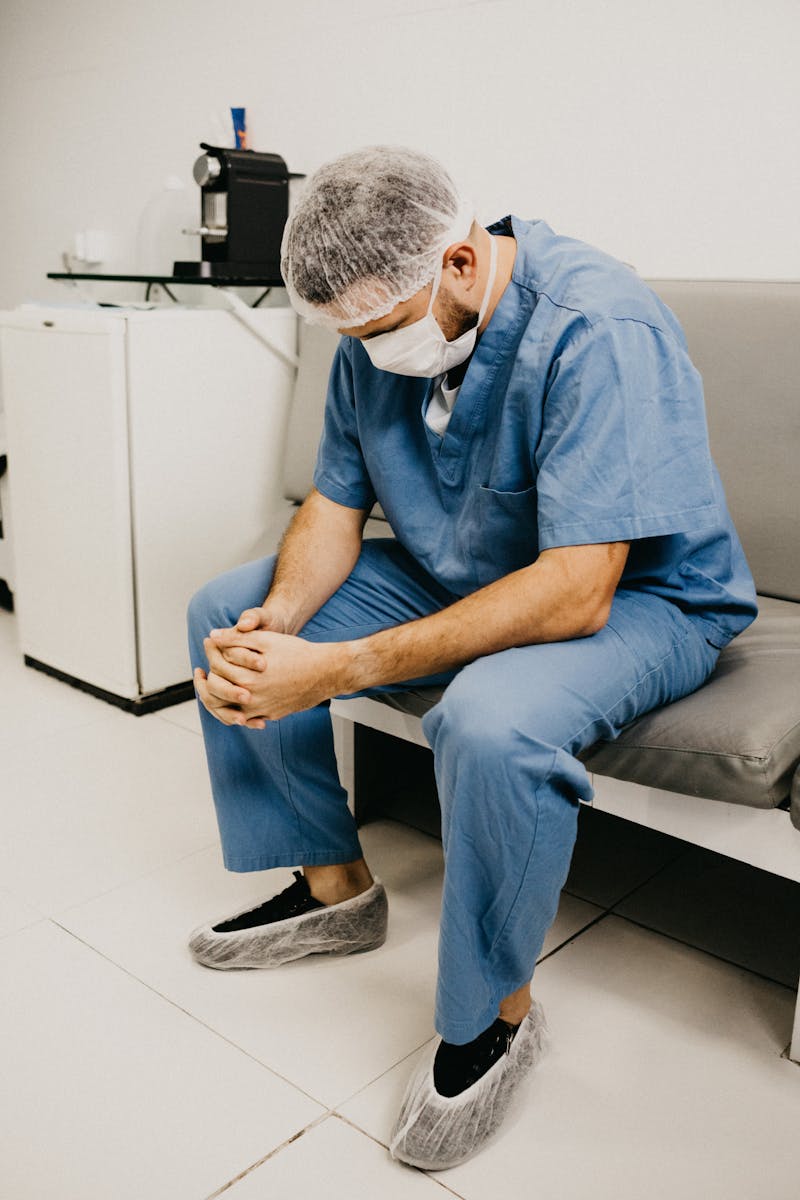
The government's flagship health insurance scheme has issued cards to 55.4 crore beneficiaries. But National Health Authority data shows only 25% of cardholders have ever used the scheme — and rejection rates at empanelled hospitals range from 18% to 44% depending on the state.
Read moreAyushman Bharat: 8.4 Crore Cards Issued, Only 2.1 Crore Claims Ever Processed — Where Did the Rest Go?

More than two years after the Supreme Court struck down the Electoral Bonds Scheme, the Court's five-judge Constitution Bench has been forced to issue a fresh direction to SBI, finding that the bank's disclosures were incomplete — 22,217 bonds remain unlinked between purchaser and political party.
Read moreSupreme Court Gives SBI 4 Weeks to Submit Full Electoral Bond Data; Attorney General Cites 'Operational Complexity'

The National Education Policy 2020 promised a fundamental restructuring of India's school system. A new report by the National Institute of Educational Planning and Administration finds that three years after state-level rollout began, fewer than a quarter of states have implemented even the foundational literacy programme, and the 5+3+3+4 curriculum structure exists only on paper in most regions.
Read moreNEP 2020 Three Years On: Only 8 of 36 States and UTs Have Fully Implemented Core Changes, Report Finds

Ramprasad Meena, a 67-year-old retired schoolteacher from Sawai Madhopur, spent three years filing 84 RTI applications to force the Rajasthan government to complete a drinking water pipeline promised in 2018. His persistence secured piped water for 4,200 households — and a contempt of court notice for the Executive Engineer who ignored 11 RTI responses.
Read more84 RTIs, 3 Years, One Retired Teacher — How Ramprasad Meena Got Piped Water to 4 Villages in Rajasthan

An RTI analysis by NT shows 2.4 crore NREGA workers across Bihar, Uttar Pradesh, Jharkhand, Odisha and five other states have not received wages for completed work in over six weeks. The delay violates the scheme's 15-day payment mandate.
Read moreNREGA Wages Delayed 47+ Days in 9 States — 2.4 Crore Workers Unpaid Despite Completing Work

The Consumer Price Index for April 2026 shows food inflation at 8.7% — the highest in 14 months. Tomatoes, onions and edible oils are the primary drivers. The RBI's tolerance band tops out at 6%; economists are divided on whether a rate response is warranted.
Read moreFood Inflation Hits 8.7% in April — Tomatoes Up 120%, Edible Oils Up 34%: What the CPI Data Shows

Results for 14 Lok Sabha and assembly by-elections declared on May 1 show the INDIA bloc winning 11 seats, including four considered safe for the ruling alliance. Political analysts say the results signal weakening ground support ahead of major state elections in Rajasthan, MP and Bihar in 2027.
Read moreBy-Election Results 2026: Opposition INDIA Bloc Wins 11 of 14 Seats — A Test Case for 2027 State Polls
The upcoming delimitation exercise will redraw India's electoral map based on 2031 Census data. States that successfully reduced fertility rates — Tamil Nadu, Kerala, Karnataka, Andhra Pradesh — stand to lose representation, while high-fertility northern states gain seats.
Read moreDelimitation After 2031 Census: Why Southern States Could Lose 14 Lok Sabha Seats
The Supreme Court's landmark ruling allowing states to sub-categorise OBC reservations — giving greater representation to the 'most backward' within OBCs — will reshape caste politics in 18 states. NT explains the legal shift, what changes, and what stays the same.
Read moreOBC Sub-Categorisation: What the Supreme Court's 7-Judge Ruling Means for 54 Crore People
The four Labour Codes passed in 2019–20 promised gig workers social security for the first time. Five years on, the Code on Social Security has still not been notified for gig workers in any state. Platform companies continue to classify drivers and delivery workers as 'partners', not employees.
Read moreIndia's 7.7 Crore Gig Workers: No Minimum Wage, No ESI, No Protection Five Years After Labour Codes

RBI's State Finances report flags that Punjab, Rajasthan, Bihar, Himachal Pradesh and four other states have crossed a critical threshold — interest payments now exceed their combined spending on education and health. Analysts warn the debt spiral will squeeze public services for a decade.
Read moreState Debt Trap: 8 States Now Spend More on Debt Interest Than Their Combined Education and Health Budgets

A new Central Ground Water Authority report classifies 12 Indian states as 'critical' or 'over-exploited' for groundwater. Bengaluru, Chennai, Jaipur, Ahmedabad and four other cities are on a trajectory to exhaust exploitable aquifer reserves within four years under current extraction rates.
Read moreGroundwater Crisis: 12 States Enter 'Critical' Zone — 8 Major Cities Face 'Day Zero' Risk by 2030

India missed its 100 GW solar target by 2022, revised it to 2026, and has now installed 86.7 GW as of March 2026 — still short. Rajasthan, Gujarat, Karnataka, Tamil Nadu, Telangana and Andhra Pradesh account for over 80% of capacity, while eastern and northeastern states lag far behind.
Read moreIndia's Solar Mission: 100 GW Target Year Passed — 86.7 GW Installed, 6 States Account for 81%

PM Fasal Bima Yojana was launched to give farmers affordable crop insurance. Ten years on, RTI data shows insurance companies have collected ₹1.36 lakh crore in premiums — of which 34% has been paid as crop loss claims. Farmers in Vidarbha and Bundelkhand report claim rejections running at 60%.
Read moreFasal Bima Yojana: ₹1.36 Lakh Crore Collected in Premiums Since 2016 — Only 34% of Crop Loss Claims Paid
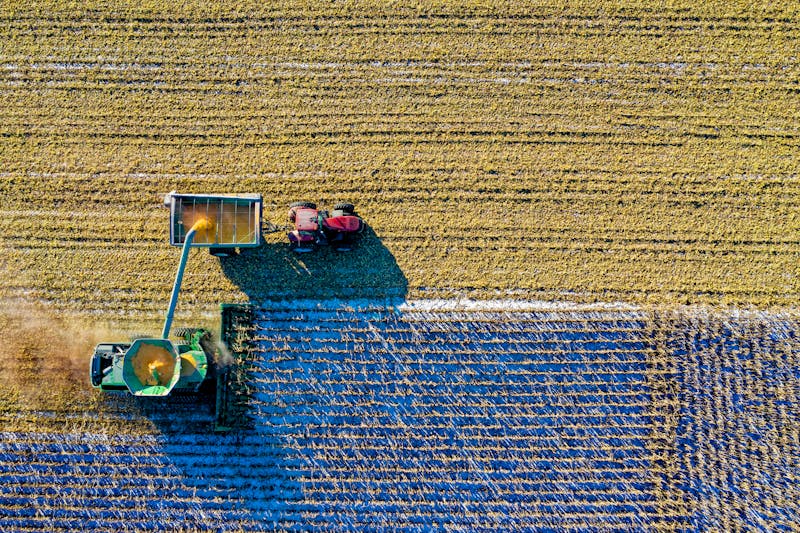
The Soil Health Card Scheme, which has issued 22 crore cards to farmers recommending optimal fertiliser doses, has had limited behavioural impact. ICAR's own survey finds that only 11% of card recipients actually changed their fertiliser application — urea overuse continues.
Read moreSoil Health Cards: 22 Crore Issued, But ICAR Survey Finds Only 11% of Farmers Changed Fertiliser Use
India accounts for 35% of the world's 148 million stunted children under five. New NFHS-6 baseline data for 12 high-burden states shows that while wasting (acute malnutrition) has declined, stunting rates have barely moved in states like Bihar, UP and Jharkhand in eight years.
Read moreChild Malnutrition: India Has 35% of World's Stunted Children — NFHS Baseline Shows Progress Stalling

The Mental Health Care Act 2017 guaranteed every Indian the right to mental healthcare. Eight years after enactment, India has 9,000 psychiatrists for 1.4 billion people — one per 155,000 citizens. 97% of district hospitals have no psychiatrist. Community mental health centres promised by 2020 exist in 3% of districts.
Read moreMental Health Act 2017: Eight Years On, 97% of Districts Still Have No Functional Psychiatrist
The PM POSHAN scheme (Mid-Day Meal) feeds 8.3 crore children daily, making it the world's largest school meal programme. But a Ministry audit finds that only 58% of enrolled children receive a full nutritionally compliant meal on all school days — gaps are sharpest in Jharkhand, Bihar and Assam.
Read moreMid-Day Meal Scheme: 8.3 Crore Children Enrolled, But Only 58% Receive Complete Nutrition on All School Days

India approved 4.1 million engineering seats for 2025–26. Only 2.47 million were filled — a 40% vacancy rate. Meanwhile, a NASSCOM survey shows 52% of engineering graduates are 'not industry-ready' for their first job, raising questions about whether India's engineering capacity is scaling in the right direction.
Read moreEngineering Seat Crisis: 40% Vacancies Nationally as AICTE Data Shows Widening Skills-Jobs Mismatch

UPI transactions crossed ₹20 lakh crore in value and 13.4 billion in volume in April 2026 — a milestone for India's payments stack. But NABARD data shows 63% of rural Indians still prefer cash for regular transactions, and only 28% of India's 6.4 lakh villages have any banking point of presence.
Read moreUPI Crosses ₹20 Lakh Crore Monthly — But 63% of Rural India Remains Cash-Dependent

India's Digital Personal Data Protection Act was notified in August 2025. A survey by the Data Security Council of India finds that 72% of companies subject to the Act have not completed basic compliance steps — no Data Protection Officer appointed, no consent framework implemented.
Read moreDigital Personal Data Protection Act: One Year After Notification, 72% of Companies Not Compliant

An UIDAI audit reveals 11.4 crore Aadhaar numbers have demographic mismatches — wrong names, dates of birth or addresses — that prevent successful bank account seeding. These errors silently block access to PM-KISAN, PMJAY, PDS and other schemes for millions of beneficiaries.
Read moreAadhaar Seeding Failures: 11.4 Crore Citizens Have Mismatched Records Blocking Government Benefits
India's 25 High Courts are functioning at 66% of their sanctioned strength — 399 of 1,114 posts are vacant. The Supreme Court Collegium has cleared 112 names in the last six months, but the government has acted on only 31. The result: 5.1 crore cases pending in courts across India.
Read moreJudicial Vacancies at 34%: High Court Bench Strength at 30-Year Low as 5.1 Crore Cases Pending

India's three new criminal laws — Bharatiya Nyaya Sanhita, Bharatiya Nagarik Suraksha Sanhita, and Bharatiya Sakshya Adhiniyam — replaced the IPC, CrPC and Evidence Act from July 2024. Nine months on, an NT survey of police stations in six states finds widespread confusion in FIR filing and trial courts adapting unevenly.
Read moreBNS, BNSS, BSA: Nine Months After Implementation — Police Training Gaps and FIR Confusion Persist

The Constitution (106th Amendment) Act, 2023 reserves 33% of Lok Sabha and state assembly seats for women. But the Act stipulates implementation only after delimitation — which won't happen before 2029 at the earliest. India currently ranks 148th globally in women's parliamentary representation at 13.6%.
Read moreIndia Ranks 148th in Women's Parliamentary Representation — 33% Reservation Seats Not Yet Notified

India's Self Help Group–Bank Linkage Programme has linked 1.43 crore SHGs to banks, with ₹10.03 lakh crore in outstanding credit. But NABARD's survey finds that only 19% of rural women can access individual formal credit without a male household member as guarantor or co-signer.
Read moreSHG-Bank Linkage Hits ₹10 Lakh Crore — But Only 19% of Rural Women Access Credit Without a Male Co-Signer
India's smartest readers
start their day with NT.
One email. Five stories. Zero noise. Delivered at 7 AM IST, every weekday.
12,400+ subscribers
+340 joined this week
- ✓Curated in 5 minutes flat
- ✓Primary sources, always linked
- ✓Unsubscribe anytime — no spam ever
Next edition: Tomorrow · 7 AM IST
Your analysis deserves
a real audience.
NT publishes original work from independent journalists, researchers & civic experts — with full editorial support.
48 contributors this year
3 new pieces published this week
Editorial reply within 48 hours · All topics considered
30
stories published
5
reporters on ground
10
categories covered
100%
source-verified